
The Year of the Agent: Why 2026 Moves Beyond Chatbots
The way we interact with artificial intelligence is about to change completely. For the past few years, AI meant chatbots that waited in a text box for you to ask questions. In 2026, AI is shifting from passive assistants that respond to your prompts into autonomous agents that can complete entire workflows without constant human supervision. This isn’t just a software upgrade. It’s a fundamental change in how businesses operate.

Nearly three out of four enterprises are already using or testing AI agents, moving beyond simple chatbot experiments to systems that take real action. The difference is clear. Chatbots help you draft an email. Agents can manage your entire customer onboarding process from start to finish. They don’t just talk about what needs to happen. They make it happen.
This shift represents what experts call the fundamental structural shift from conversation to completion. Instead of saving your team minutes on small tasks, autonomous agents can save days of work on complex processes. The question isn’t whether AI agents will transform your business. It’s whether you’ll be ready when they do.
Key Takeaways
- AI agents can complete full workflows independently rather than just responding to prompts like chatbots
- Businesses are moving from specialized worker agents to orchestrated systems that break down complex tasks automatically
- Success in 2026 depends on proper data infrastructure, governance frameworks, and human-agent collaboration strategies
Defining the Shift: From Chatbots to Autonomous AI Agents

Chatbots respond to questions while AI agents complete entire tasks independently. The difference comes down to agency: one waits for instructions, the other pursues goals through planning, tool use, and self-correction.
Limitations of Chatbots and Conversational AI
Traditional chatbots operate as passive systems. You ask a question, they generate an answer, and the conversation ends there.
They cannot access your files, run code, or interact with other software. If ChatGPT suggests fixing a bug in your Python script, you still need to open the terminal, type the commands, and handle any new errors yourself. The AI provides advice but lacks the ability to execute it.
Key limitations include:
- No real-world actions – They cannot modify files, send emails, or update databases
- Short memory spans – Context resets between sessions or after token limits
- Single-turn thinking – They respond once rather than iterating until a task completes
- Human-dependent execution – You must implement every suggestion manually
Your role becomes the bridge between the AI’s ideas and actual results. This creates friction in workflows that require multiple steps or error correction.
Core Features of AI Agents and Agentic AI
Autonomous AI agents break tasks into steps, use tools to complete them, and adjust their approach based on results. They operate in loops rather than single exchanges.
The architecture includes four main components:
| Component | Function |
|---|---|
| LLM Brain | Makes decisions about what action to take next |
| Tools | Executes functions like web search, code interpretation, or API calls |
| Planning Module | Creates multi-step strategies and evaluates progress |
| Memory Systems | Stores past interactions and solutions in vector databases |
When you give an agent a goal like “fix the deployment error,” it reads your logs, identifies the problem, modifies the configuration file, runs tests, and verifies the fix works. Agentic workflows move from answering to doing.
The agent doesn’t stop after one attempt. If the first solution fails, it analyzes the new error and tries a different approach.
How Autonomous AI Agents Transform Business Workflows
Autonomous agents handle complete processes that previously required human oversight at every step. They monitor systems, detect issues, investigate causes, and implement fixes without waiting for approval.
In software development, agents clone repositories, reproduce bugs, write test cases, and open pull requests. Your senior developers only review the final code rather than writing it from scratch.
Security teams deploy agents that respond to threats in real time. When suspicious activity appears, the agent checks IP reputation, queries firewall logs, and isolates compromised servers before alerting human analysts.
Marketing departments use agents to track competitor pricing across dozens of websites daily. The agent visits each site, captures changes, and updates spreadsheets automatically.
Research shows agentic AI delivers 3-5x performance improvements over traditional chatbots by completing tasks end-to-end. You shift from executing AI suggestions to managing AI workers who handle execution themselves.
Key Drivers: Why 2026 Is the Year of the Agent
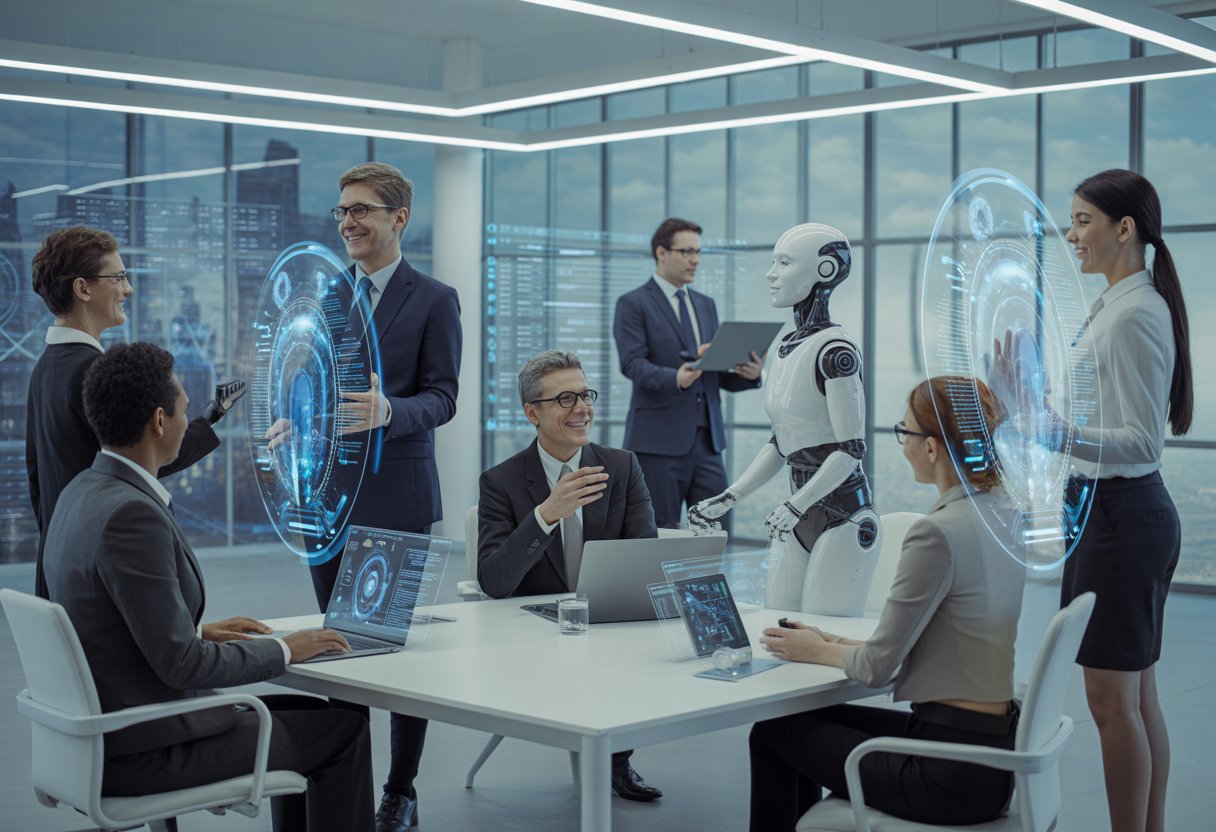
The shift from experimental chatbots to production-ready AI agents stems from three converging forces: organizations have built the infrastructure and expertise needed to deploy autonomous systems, businesses are moving beyond test projects into full-scale implementations, and companies are redefining how human workers collaborate with AI.
Enterprise AI Maturity and Adoption
Your organization likely spent the past two years experimenting with generative AI tools like ChatGPT. That groundwork has prepared enterprises for the next phase.
Nearly 72% of enterprises are already using or actively testing AI agents, signaling a massive shift in enterprise AI strategy. You’re no longer asking whether AI fits into your operations. You’re asking which specific workflows AI agents should handle first.
The technical foundation matters here. Your IT teams have learned how to integrate AI systems with existing databases, security protocols, and compliance frameworks. Your leadership understands the difference between a chatbot that answers questions and an agent that takes action across multiple systems.
This maturity extends beyond technology. You’ve developed governance structures, assigned accountability for AI decisions, and trained employees on AI capabilities. The infrastructure you need to deploy autonomous agents already exists in your organization.
The Inflection Point: From Pilots to Production
You’re witnessing a fundamental change in how businesses approach AI implementation. AI agents are no longer peripheral enhancements but are becoming central to productivity, security, customer experience, and workforce operations.
The pilot phase has ended. Your competitors are deploying agents that handle multi-step processes without human intervention. In financial services, agents process loan applications by gathering documentation, verifying information, and coordinating approvals. Healthcare providers use agents to manage entire patient journeys from diagnosis through follow-up scheduling.
You’re seeing this shift because the technology has proven itself at scale. Early adopters have demonstrated clear ROI, and the cost of deployment has dropped significantly. The risk of not adopting agentic AI now exceeds the risk of implementation.
Workforce Readiness and Digital Colleagues
Your employees are learning to work alongside AI agents as digital colleagues rather than viewing them as replacement threats. This represents a crucial mindset shift that makes 2026 different from previous years.
You need to think about agents as team members with specific capabilities. A marketing team might work with an agent that analyzes customer data, generates campaign ideas, and coordinates with inventory systems. Your sales team could rely on an agent that schedules meetings, prepares proposals, and tracks follow-ups.
The key difference is collaboration architecture. Your agents don’t just complete isolated tasks. They communicate with other agents, share data across departments, and escalate complex decisions to human supervisors when needed. You’re building workflows where humans focus on strategy and judgment while agents handle execution and coordination.
Agentic Automation and Orchestrated Workflows
AI agents can manage complex processes that span multiple systems and platforms, working independently or alongside other specialized agents. This capability transforms how your business handles intricate operations that previously required constant human oversight.
End-to-End Workflow Automation
Unlike traditional automation that handles single tasks, agentic automation manages complete business processes from start to finish. Your AI agents can orchestrate workflows across different software platforms like ERP systems, CRM databases, and inventory management tools without human intervention.
These agents perceive their environment through data inputs, make decisions based on real-time information, and execute actions across multiple systems. For example, in supply chain management, an agent can monitor inventory levels, predict shortages, generate purchase orders, communicate with suppliers, and update financial records all within a single automated workflow.
The key difference is intelligence. Your agents can handle exceptions, adapt to changing conditions, and make judgment calls within their defined scope. They don’t just follow rigid rules like older automation tools.
Multi-Agent Systems and Collaboration
AI Agents can form teams where specialized agents work together on complex problems. Each agent brings specific capabilities to tackle tasks that would overwhelm a single system or human team.
Your multi-agent systems operate in two ways:
- Human-agent partnerships: Agents handle data analysis and routine execution while deferring critical decisions to you
- Agent-to-agent collaboration: Multiple specialized agents coordinate their actions to complete large-scale objectives
These collaborative systems adapt dynamically. When you face a complex customer issue, one agent might handle initial diagnosis, another pulls relevant historical data, and a third generates solutions based on your company’s policies and past resolutions.
Specialized Autonomous Agents vs Generalist Models
You’ll need to choose between deploying specialized agents trained for specific functions or generalist models that handle broader tasks. Specialized autonomous agents excel in narrow domains like financial reconciliation or technical support because they’re optimized for particular workflows and decision-making patterns.
Generalist models offer flexibility across different business areas but may lack the depth needed for complex domain-specific challenges. Your specialized agents typically deliver higher accuracy and faster processing within their expertise area.
Most organizations benefit from a hybrid approach. You can deploy specialized agents for critical functions like compliance monitoring or fraud detection while using generalist models for customer-facing interactions that require broader conversational abilities.
Practical Applications of AI Agents in the Enterprise
AI agents are already moving into production environments across major business functions. Companies are deploying these systems to handle complex workflows that require multiple steps, decision-making, and integration across different tools and data sources.
Customer Experience and Intelligent Resolution
Your customer service operations can benefit from AI agents that go far beyond simple chatbot responses. Unlike generative AI tools that only answer questions, agentic AI systems provide end-to-end customer service experiences by accessing multiple CRM functions and resolving complete cases without human oversight.
These agents can handle personalized case management across your entire customer journey. They pull information from knowledge bases, process refunds, update account details, and coordinate with other systems to close tickets completely.
When issues become too complex, the agents don’t just escalate randomly. They analyze the problem and route it to the right specialist with full context already prepared. This cuts down on repetitive explanations and speeds up resolution times for your customers.
Operations and Supply Chain Optimization
Your supply chain network faces constant disruptions that traditional automation can’t handle effectively. AI agents can forecast potential problems by analyzing weather patterns, supplier data, shipping routes, and inventory levels simultaneously.
These systems dynamically reallocate resources and adjust logistics in real time without waiting for human approval on routine decisions. They can even negotiate with suppliers automatically, adjusting order quantities and delivery schedules based on current conditions.
The agents also help you scale capacity based on variable demand. Instead of hiring more staff during peak seasons, your AI agents handle the increased workload and then scale back down when demand drops.
DevOps, IT, and Code Automation
Your IT infrastructure requires constant monitoring and quick responses to threats. AI agents can watch your entire technology stack in real time, identifying anomalies and security vulnerabilities before they become serious problems.
These agents deploy patches and implement mitigations with minimal human intervention. They don’t just alert your team to issues—they take action to resolve them based on established protocols and learned patterns.
For development teams, AI agents can review code, suggest improvements, and even write specific functions based on your requirements. They integrate with your existing DevOps pipelines and help maintain code quality standards across your organization.
AI Integration, Governance, and Auditability
Companies moving to AI agents need clear rules for how these systems connect to existing tools, who monitors their decisions, and how to track what they do. Without proper structure, autonomous AI can create security risks and compliance problems.
Best Practices for AI Integration in Business Systems
Start with systems that have clear inputs and outputs. Connect AI agents to one department or workflow before expanding across your organization.
Key integration steps include:
- Define what data the agent can access and modify
- Set permission levels that match employee roles
- Create backup processes for when agents fail
- Test agents in isolated environments first
Your AI integration should include API monitoring to catch errors before they affect customers. Build redundancy into critical workflows so human staff can take over quickly. Document every connection point between agents and your existing software.
Limit agent permissions to only what they need for their specific tasks. An agent handling customer emails doesn’t need access to financial records. This reduces risk if the system makes mistakes or gets compromised.
AI Governance and Accountability
AI governance becomes essential when enterprises scale entire fleets of task-specialized agents across different business functions. Someone in your company must own decisions made by autonomous systems.
Create a governance team with members from IT, legal, and operations. This team reviews agent performance and sets boundaries for what agents can do without human approval.
Your governance framework should address:
- Who approves new agent deployments
- How often you review agent decisions
- What triggers immediate human intervention
- Which actions require executive sign-off
Set clear thresholds for autonomous actions. For example, agents might approve refunds under $100 but escalate larger amounts to managers. Update these rules as you learn how agents perform in real situations.
Maintaining an Audit Trail with Autonomous Agents
Every decision an AI agent makes needs to be logged with timestamps and reasoning. Your audit trail must show what data the agent used, what action it took, and why it chose that option.
Store logs in tamper-proof systems that meet regulatory requirements. Include the agent version number in each entry so you can trace problems back to specific updates.
Essential audit trail components:
- Input data the agent received
- Decision logic and confidence scores
- Actions taken or recommendations made
- User or system that triggered the agent
- Any errors or exceptions encountered
Review audit logs weekly to spot patterns of mistakes or bias. Your logs should let you recreate any agent decision months later if questions arise. This protects your company during regulatory reviews and helps you improve agent performance over time.
Strategic Implications: Managing Human-Agent Collaboration
AI agents require new frameworks for workforce planning that account for both human employees and digital workers. Organizations must rethink job roles, reporting structures, and performance management as AI agents become powerful partners in knowledge work.
Redefining Roles and Digital Workforce Management
Your organization needs to think differently about what constitutes your workforce. Moderna combined its HR and IT functions under one chief people and digital technology officer to plan for work itself, not just human employees or technology separately.
You should consider which tasks to give to agents and which require human judgment. Insurance company Mapfre uses agents for routine tasks like damage assessments but keeps humans involved in sensitive customer communications. This hybrid approach changes the nature of jobs by letting your employees focus on higher-value work.
Agents require management similar to human workers:
- Onboarding for both the agent and its human supervisor
- Performance tracking through digital identity systems and logs
- Life cycle planning including updates and redeployment
- Access controls through authentication systems
You need frameworks to prove what agents did, why they made decisions, and who authorized their actions.
Organizational Changes for the Agentic Era
Your company must establish clear boundaries for agent decision-making through graduated autonomy levels. The progression moves through three phases: augmentation where agents enhance human capabilities, automation where agents handle defined processes, and true autonomy with minimal oversight.
You should deploy agent supervisors who enter workflows at strategic points to handle exceptions. Toyota uses agents to deliver real-time vehicle shipment information without staff touching the mainframe. The agents will soon identify delays and draft resolution emails before team members arrive in the morning.
Successful AI adoption requires you to redesign processes and transform organizational structure. Your employees increasingly focus on two areas: compliance and governance of agent operations, plus growth and innovation opportunities.
Maximizing Value from AI Agents
You gain the most value by focusing on specific domains rather than attempting enterprise-wide automation. Deploy multiple specialized agents working together instead of single broad solutions.
Strategic partnerships deliver better results than building everything internally. Research shows that pilots built through partnerships reach full deployment twice as often, with employee usage rates nearly double those of internally built tools.
You should track the digital exhaust agents generate. Every action creates data that can improve future performance. Your competitive advantage comes from how you use this continuous data stream to reinforce learning systems.
Focus your initial deployments on well-defined tasks where AI agents can deliver measurable efficiency gains. This allows you to prove value while building the organizational capabilities needed for broader transformation.
Frequently Asked Questions
AI agents represent a fundamental shift in how artificial intelligence interacts with tasks and systems. Nearly three out of four enterprises are already using or testing AI agents, marking a clear transition from passive conversation tools to active task executors.
What are the characteristics that differentiate AI agents from traditional chatbots?
The main difference between AI agents and chatbots comes down to action versus conversation. Traditional chatbots respond to your questions with text-based answers. They wait for your input and provide information.
AI agents take a different approach. They break down high-level goals into sub-tasks, use tools to execute actions, and iterate until they complete the objective. You might tell a chatbot to explain how to fix a bug. An AI agent will actually open the file, write the patch, run tests, and push the changes to GitHub.
Memory systems also separate these two technologies. Chatbots typically work within limited context windows. AI agents connect to vector databases and file systems to store long-term information about past solutions and user preferences.
AI agents operate in loops rather than single exchanges. They can reason about a situation, take action, observe the results, and adjust their approach. This means they don’t stop after giving you advice—they keep working until the task is done.
How does the ‘30% rule’ apply to the development and deployment of advanced AI agents?
Your question about the ‘30% rule’ requires clarification, as this specific metric doesn’t appear in current AI agent development frameworks. No established industry standard uses this exact percentage for agent deployment.
AI agent development focuses on success rates for task completion rather than fixed percentage rules. Your evaluation metrics should measure how often an agent successfully completes its assigned goals without human intervention.
Cost and latency considerations matter more than arbitrary thresholds. A single agent request might trigger 50 internal steps, making efficiency a key concern for your deployment strategy.
Who are the leading companies dominating the AI agent industry?
Microsoft stands out as a major player with its AutoGen framework. This platform lets you build teams of agents with different roles that work together to solve problems.
LangChain and its evolution LangGraph provide essential tools for developers. LangGraph handles cyclical, stateful flows that agents need for try-fail-retry loops.
CrewAI has gained significant traction by treating agents like employees. You assign each agent a role, goal, and backstory, making role-based orchestration simpler.
Major cloud infrastructure providers are solidifying the terminology and practical implementation of what they call Frontier Agents. These companies shape how businesses deploy agentic AI systems.
Open-source projects using Llama and Mistral models are creating alternatives to commercial solutions. These allow you to run agents on local hardware for privacy and cost savings.
In what ways are autonomous AI agents expected to influence customer service interactions?
Autonomous AI agents will handle customer inquiries from start to finish without human handoffs. Instead of routing your question through multiple representatives, an agent will access your account history, process your request, and execute the solution.
These agents can investigate issues across multiple systems simultaneously. When you report a problem, the agent checks logs, queries databases, and reviews transaction histories while maintaining the conversation with you.
Speed becomes the defining advantage. Traditional customer service requires you to wait for availability and manual processing. AI agents work 24/7 and resolve issues in minutes rather than hours or days.
Personalization improves through memory systems. Your AI agent remembers previous interactions and preferences without asking you to repeat information. It adapts its communication style based on your past conversations.
What advancements in AI technology are crucial for the evolution of AI agents beyond 2026?
Large Action Models represent a critical evolution beyond language-focused AI. These models train on API calls, function execution, and software interaction rather than just text generation.
Planning capabilities need significant improvement. Your agents must create multi-step strategies, anticipate failure points, and develop backup approaches before taking action.
Tool integration requires standardization. Agents need reliable ways to connect with web searches, code interpreters, file systems, and API connectors across different platforms.
Security frameworks must evolve to address prompt injection attacks. When you give an agent access to your terminal or email, you create potential vulnerabilities that need zero-trust architecture solutions.
Infinite loop prevention demands better guardrails. Your agents need systems that recognize when they’re stuck and know when to ask for human help after repeated failures.
How do autonomous AI agents integrate with existing digital ecosystems to enhance user experience?
AI agents connect to your existing tools through executable functions. They access web search APIs, code sandboxes, file systems, and communication platforms like Slack, Jira, and GitHub.
Vector databases serve as the bridge between agents and your historical data. These systems store past solutions, documentation, and user preferences so agents can learn from previous interactions without starting from scratch each time.
Your agents operate within your security parameters. They authenticate through existing identity management systems and respect the same access controls that govern human users.
The integration happens at the API level. Your existing software doesn’t need major rewrites—agents interact with the same endpoints and interfaces that your current applications use.
Agents are transitioning from IT projects to business ownership, meaning different departments control how agents integrate with their specific tools and workflows. This distributed approach lets you customize agent behavior for marketing, development, security, or operations without creating bottlenecks.